
Multi-currency inbound details
Organise remittance fields and references by customer or order to reduce rework and returns.
B2B ledger · cross-border
Centralise overseas goods payments and multi-currency inbound funds; compare foreign trade collection methods, FX settlement and reconciliation workflows. The left panel is an interactive cash-flow stage preview, not an actual back-office screen.
Cash-flow stages · tap to switch

Who it's for
From PO receipt to reconciliation and FX settlement — typical B2B and supply chain rhythms. Activation remains subject to review.
High order and inbound volumes — clarify notifications and split rules first so month-end close does not slip.
When buyer and seller time zones and document milestones diverge, align understanding with one inbound narrative and status set.
With multiple clearing paths in parallel, you need traceable inbound records for internal allocation.
For multi-site write-offs, focus on consistent fields and export formats.
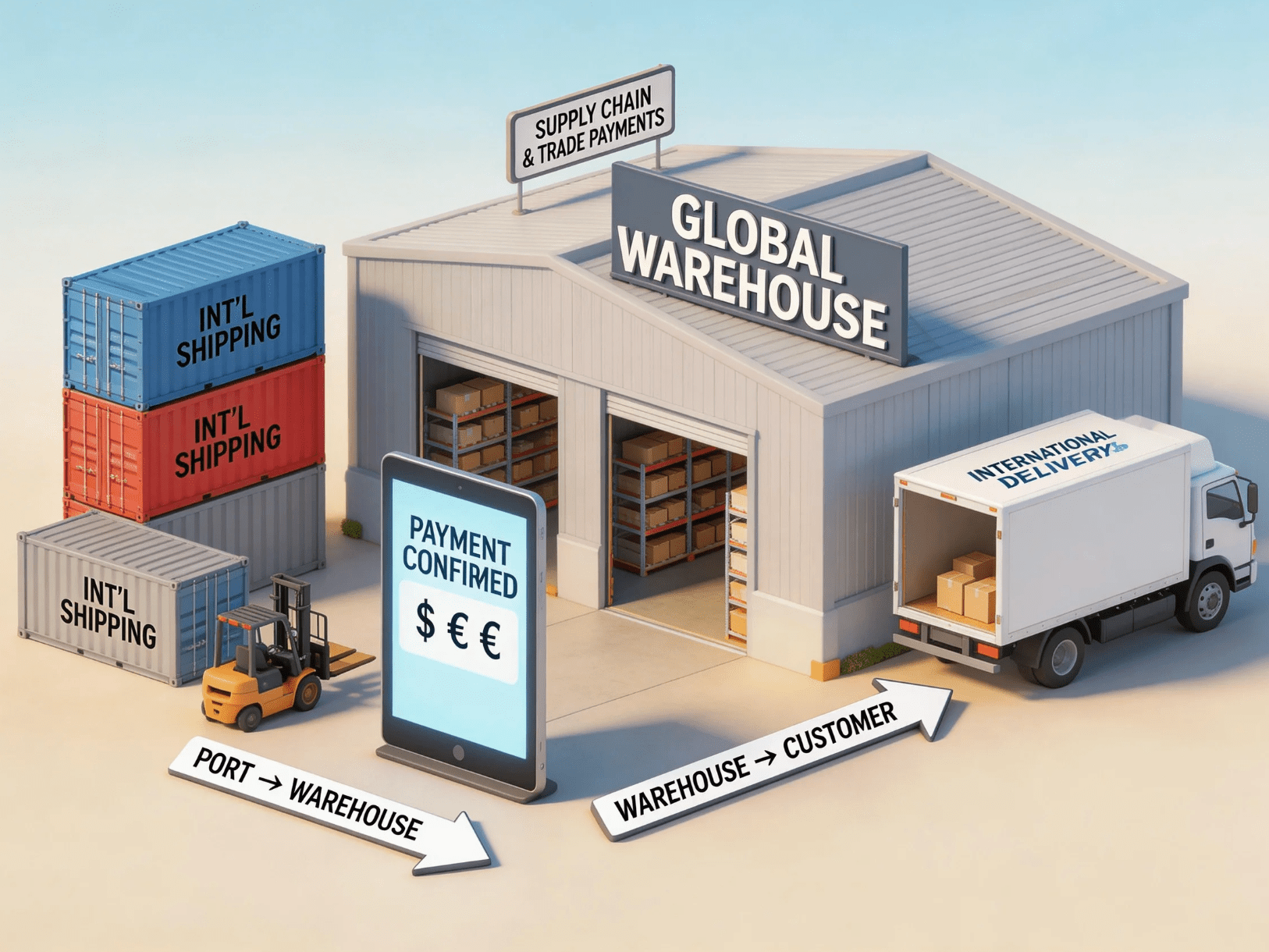
Real-world scenarios
In foreign trade, the drain is often not whether funds arrived but which PO or invoice they match, whether to split, and when to recognise revenue. When overseas buyer remittance details align with internal orders, shipments and payment terms in one narrative and status set, sales and finance need not piece things together from chat logs before deadlines.
LPayLinks foreign trade collections converges inbound notifications, split rules and summary fields into a reviewable workflow; detailed capabilities, currencies and report formats follow review outcomes and your written agreement.
From buyer inbound to internal recognition
Typical alignment sequence (adjustable per organisation).
Buyer remittance & reference
Agree invoice numbers, PO or contract codes in remittance references; match on inbound first to reduce same-name, different-case confusion.
Inbound status & credit summary
Sales see whether funds are complete; finance see value dates and fee impact — avoid reconciling with different Excel versions.
Internal reconciliation & allocation
With OEM, procurement and trading lines in parallel, inbound per agreed split rules helps month-end and close converge in one pass.
PI, CI, bills of lading and remittance details cross-index in the workflow for audit context.
Deferred LC and TT milestones differ — synced status helps cash flow and credit management.
Recognition, write-offs and external receipts/payments can be reviewed on a fixed cadence, reducing quarter-end catch-up.
Modules & capabilities
Common scenarios below; activation scope, currencies and fees follow your agreement and adviser responses.
Organise remittance fields and references by customer or order to reduce rework and returns.
With OEM, trading and procurement in parallel, encode rules in the workflow for easier month-end.
Sales see stages, finance see summaries — one context reduces verbal handoffs.
Acceptance, bills of lading and due dates can be noted in the workflow for working-capital forecasting.
Maintenance, inbound and FX (if any) listed separately for internal benchmarking.
Recommend fields and export cadence based on your reports and ERP habits.
Onboarding rhythm
Submit registration and business description; advisers flag missing items to reduce review back-and-forth.
Collections permissions activate after approval; enhanced due diligence may extend timelines.
Share routing and reference formats with buyers or bank officers to reduce first-time errors.
Check status, export or integrate from the back office; fields per mutual agreement.
General guidance only; where this differs from your agreement or operating region, the written agreement applies.
Depends on documentation completeness and review complexity; advisers provide estimated timelines during onboarding.
Supported currencies and clearing paths depend on product version and agreement; request a summary list before activation.
Typically account maintenance, inbound, FX or withdrawal combinations; formal quotes follow business assessment.
Discuss report export or API per internal control needs; actual technical scope follows project assessment.
Depends on correspondent banks and currency routes; the system updates status at identifiable stages for internal follow-up.

CONNECT TO WORLD
PAY
Create your business account and get adviser guidance.
Complete verification and review; activate multi-currency.
Activate collections, acquiring, payouts and FX.
For compliance and risk disclosures seehomepage compliance section; actual services follow your agreement.